

Scrub-A-Dub-Dub… Let’s Talk About Exfoliation
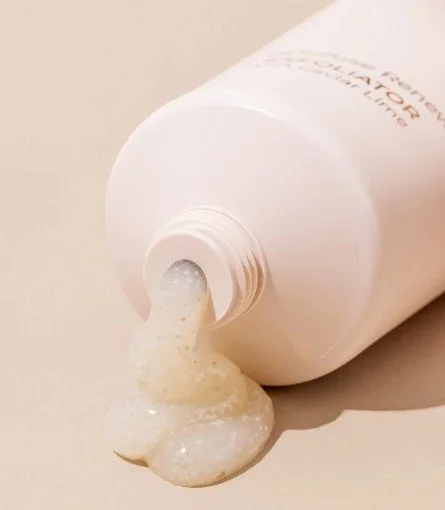
You guessed it. Today we’re talking about one of the most important steps in skincare: getting the dead stuff off your face. Not glamorous, I know… but exfoliation is one of the fastest ways to take your skin from dull and tired to glowing and smooth. When you remove that layer of dead skin cells sitting on the surface, you reveal the fresh, radiant skin underneath.
Here’s a little perspective: your body sheds somewhere between 30,000 and 40,000 skin cells every single day. Pretty wild, right? The process responsible for this is called cell turnover. That’s when your skin pushes old, dead cells up to the surface while new cells are created underneath. The catch? This process slows down as we age.
When we’re babies, our skin renews itself in about 14 days. As teenagers, it’s closer to 28 days. By the time we’re adults, it can take 28 to 42 days and after 40, it can slow down even more. That slowdown is one of the reasons skin can start to look dull, uneven, or a little tired. The good news is that exfoliation helps encourage that renewal process, giving your skin the boost it needs. But not all exfoliation is the same.
Mechanical (or Manual) Exfoliation
This is the one most people are familiar with. Mechanical exfoliation uses a physical scrub or tool to manually remove dead skin cells from the surface of the skin. Think facial scrubs, microdermabrasion, or dermaplaning. These methods work well because they immediately remove buildup sitting on top of the skin, leaving it smoother and brighter.
Microdermabrasion uses a minimally abrasive device that gently sands away the outer layer of skin while suction removes the dead cells. It’s a very controlled form of exfoliation with little to no downtime. After a treatment, the skin may be slightly sensitive, so hydration and sunscreen are key.
Dermaplaning is another popular option. During this treatment, a sterile blade is used to gently scrape away dead skin cells and remove vellus hair also known as peach fuzz. The result is incredibly smooth skin that reflects light better, which is why people often say their skin looks instantly brighter afterward. And just to clear up a common myth: your hair will not grow back thicker or darker after dermaplaning. That’s physiologically impossible.
Enzymatic Exfoliation
If you have sensitive skin or you simply prefer something gentler, enzyme exfoliation can be a great option. These exfoliants use natural fruit enzymes, often from papaya or pineapple, to dissolve dead skin cells instead of scrubbing them away. They work by gently breaking down the proteins that hold dead cells together on the skin’s surface. Because of this, enzyme exfoliation tends to be less abrasive and more forgiving, making it ideal for people who find scrubs or stronger acids irritating.
Chemical Exfoliation
Now let’s talk about the type of exfoliation that often sounds scarier than it actually is: chemical exfoliation. Despite the name, these formulas usually rely on gentle fruit acids that help dissolve dead skin cell buildup and encourage faster cell turnover.
The two main categories are AHAs (Alpha Hydroxy Acids) and BHAs (Beta Hydroxy Acids). AHAs work on the surface of the skin. They loosen the bonds holding dead skin cells together so they can shed more easily. This helps reveal smoother, brighter skin and is especially helpful for dry or dull complexions.
BHAs, on the other hand, are oil-soluble. This means they can travel deeper into the pores to break up oil and congestion. Because of this, they’re often a great choice for oily or breakout-prone skin. They also have anti-inflammatory and antibacterial properties, which can help calm blemishes.
The Most Important Rule: Don’t Overdo It
Here’s the biggest takeaway when it comes to exfoliation: more is not better. Over-exfoliating can damage your skin barrier, leading to redness, irritation, and inflammation basically the opposite of what we want.
If you’re just starting out, begin with once a week and see how your skin responds. From there, you can work up to two or three times per week at most, and evening is usually the best time to do it. Your skin should feel smoother and brighter, not tight, angry, or irritated. And as always, it’s a great idea to talk with a skincare professional about what type of exfoliation is best for your skin.
Once you find the right method and the right balance, the glow you’ll see in your skin is absolutely worth it.